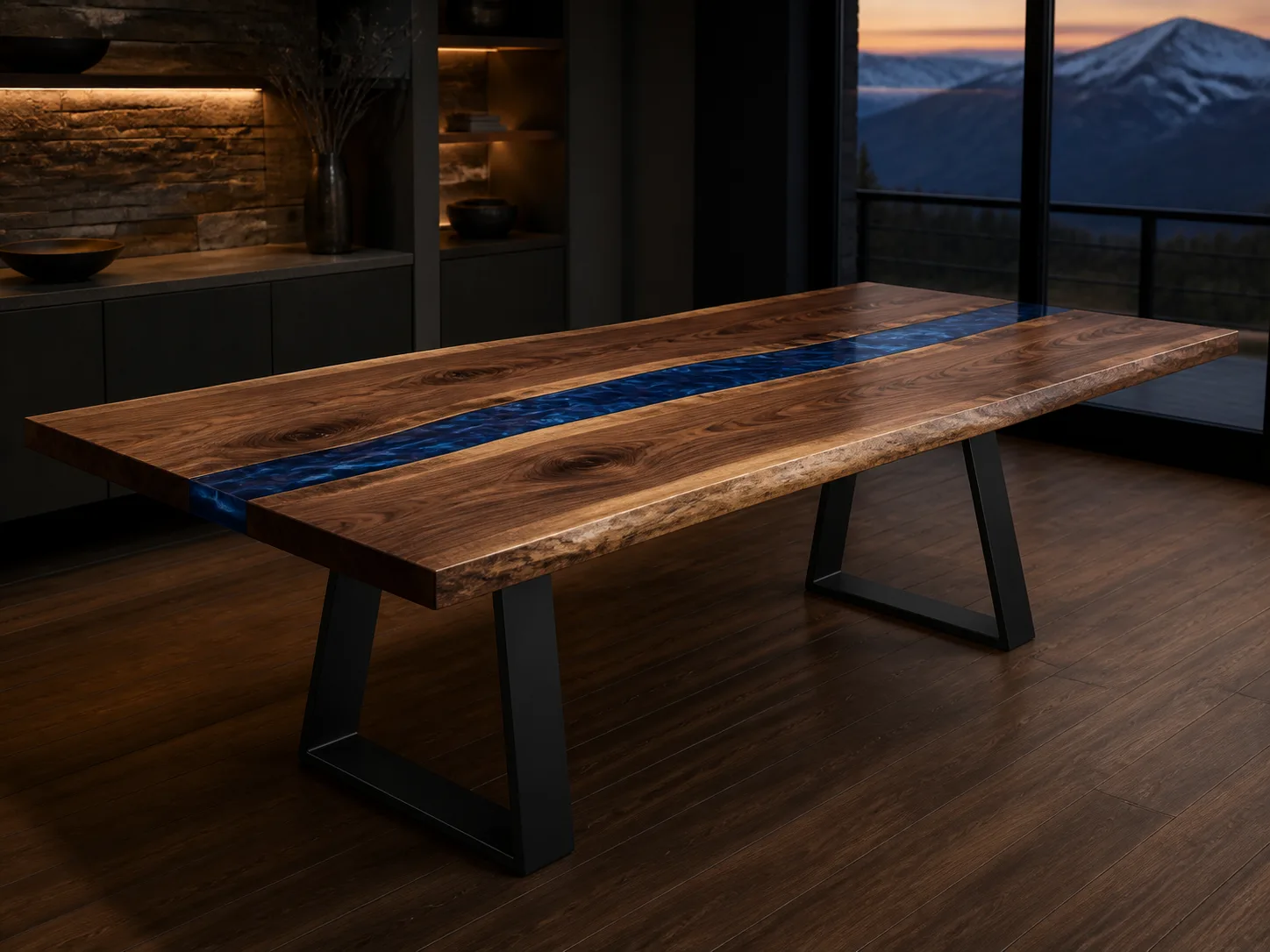
Finished size: 72" × 38" × 30" with a 1¾" top and a 5–7" average river. The design uses two flattened, kiln-dried walnut slabs on steel bases with slotted mounting holes for seasonal wood movement.
Materials + cut list
Two kiln-dried black-walnut slabs, roughly 84" × 18–22" × 2¼" before milling
3–4 gallons of deep-pour casting epoxy, transparent sapphire dye, and live-edge sealing epoxy
Two welded 28" × 27" trapezoid bases from 2" × 3" × ⅛" steel tube
Acclimate the slabs, verify 6–10% moisture, flatten both faces, and trim them to matched 72-inch blanks.
Remove bark and unstable fibers, arrange a 5–7-inch river, seal every live edge and end grain, then leak-test the mold.
Mix and pour the sapphire river in lifts that stay within the epoxy manufacturer's depth and temperature limits; allow a full cure before demolding.
Flatten the cured top, ease the edges, sand the wood through 220 grit and the epoxy through the polishing sequence, then apply a furniture-grade hardwax finish.
Weld, square, and powder-coat the bases; add slotted mounting plates and leveling feet before final assembly.
Center the bases about 11 inches from each end and fasten through slotted holes so the walnut can move across its width.
Build guidance is concept-level. Confirm slab stability, base load capacity, finish compatibility, ventilation, PPE, cure schedule, and maximum pour depth with your material suppliers before fabrication.